GEM PROCESS
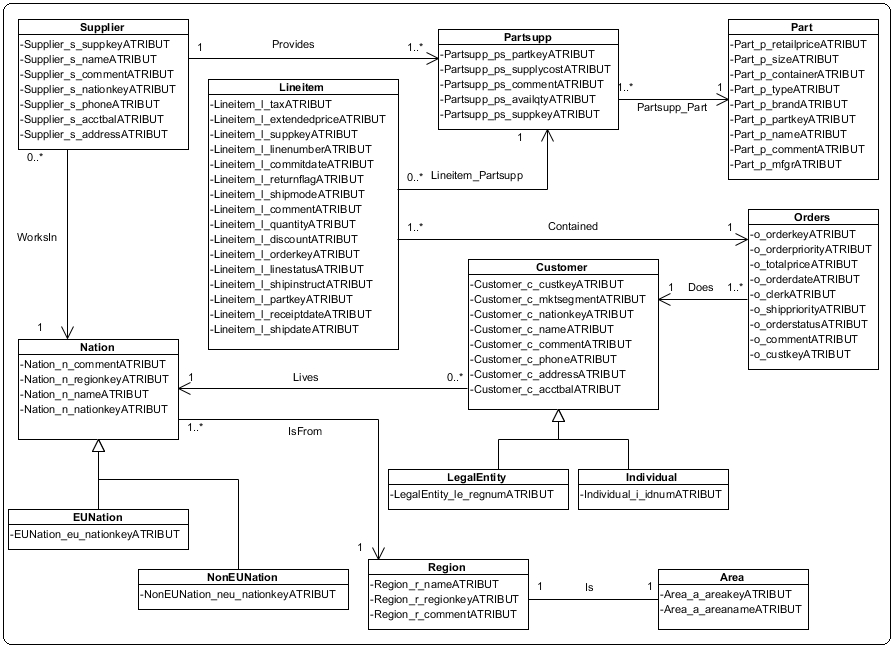
Data sources captured by an ontology
Business requirement (XML)
INPUTS
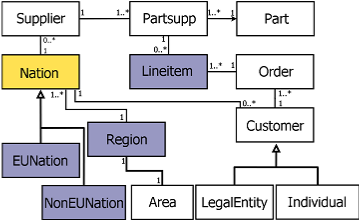
Ontology concepts identified in the business requirements and mapped to the sources
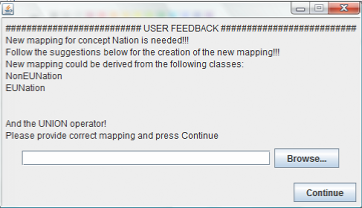
GEM suggesting user how to derive mapping for "Nation" and waits for the user's feedback
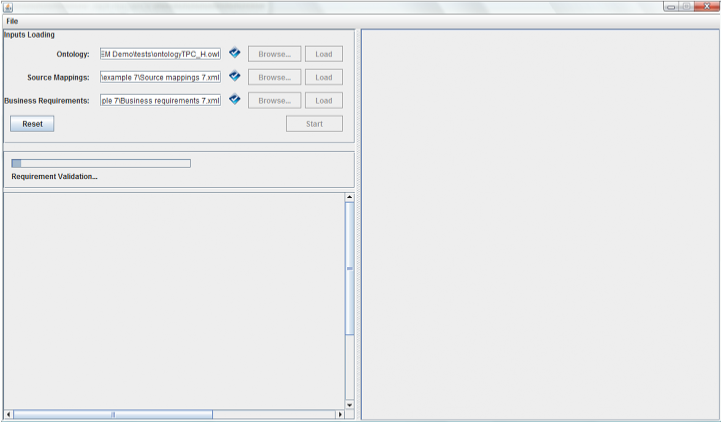
Requirements validation stage
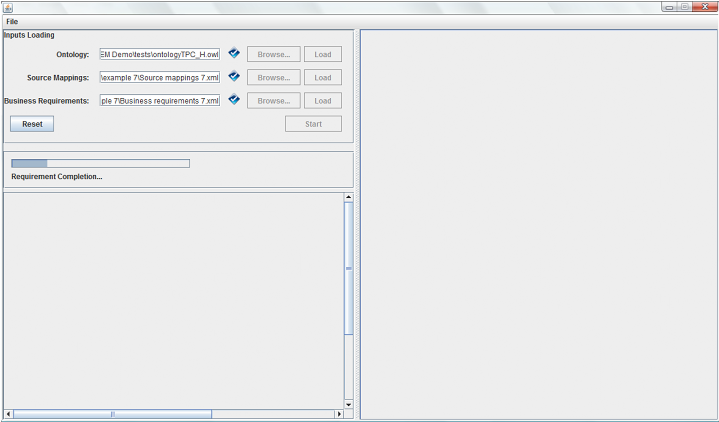
Requirements completion stage
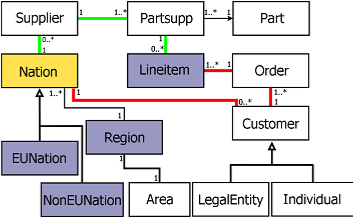
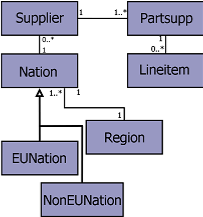
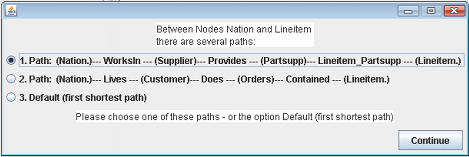
Two different paths identified between "Nation" and "Lineitem". One through "Supplier" and another one through "Customer".
GEM informs designer about the multiple paths ambiguity and waits for the feedback.
Ontology subset that answers the business requirement.
(Path through "Supplier" is chosen)
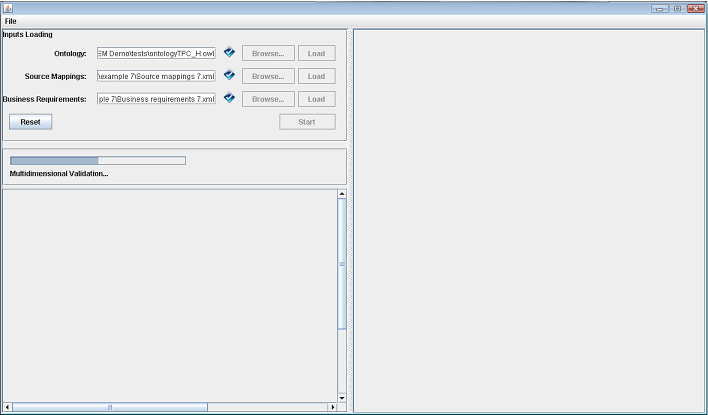
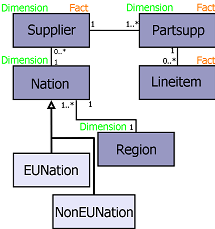
Multidimensional validation and tagging stage
Concepts of the ontology subset
are tagged with their possible
multidimansional roles
(Factual or Dimensional)
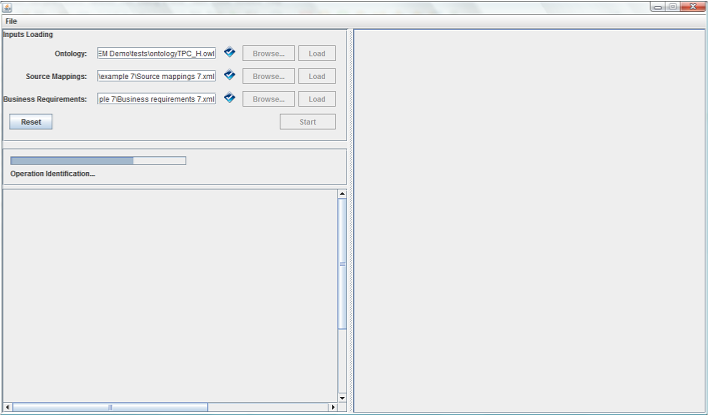
Operation identification stage
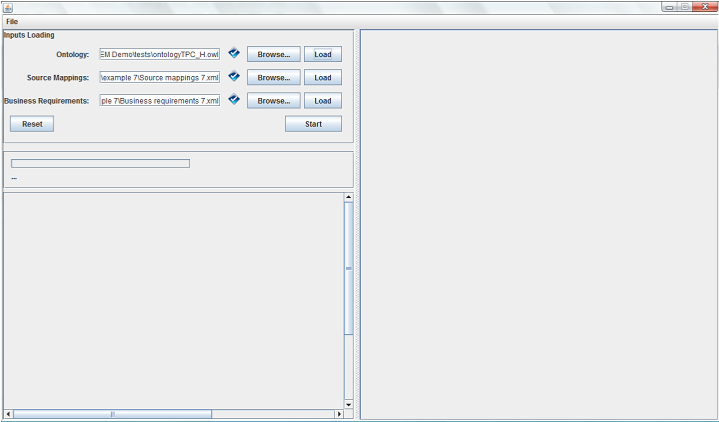
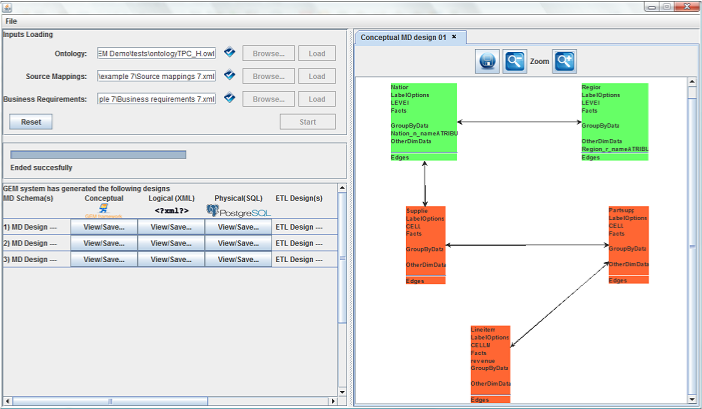
GEM application window is divided in four parts:
(1) Part for loading the input data.
(2) Part for monitoring the progress of the design generation process.
(3) Part for showing the result options.
(4) Part for presenting the resulting designs.
After the inputs are loaded
(Browse+Load)
the process can begin (Start).
GEM process successfully ended
GEM produced conceptual MD and ETL designs along with their translations to the logical level represented in XML.
GEM translates MD design to physical level in form of SQL ready to be deployed on PostgreSQL DBMS.
GEM translates ETL design to physical level in form of PDI (i.e., Kettle) transformation ready to be deployed and run in Pentaho Spoon tool.
GEM identifies necessary ETL operations.
Conceptual design of ETL process is produced.
Conceptual design of MD schema is produced
OUTPUT DESIGNS
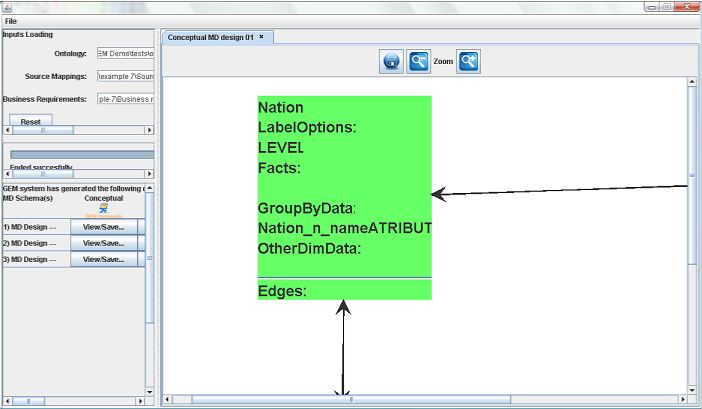
Conceptual MD design - dimension
By zooming in we can see details of each concept.
In this case dimensional concept Nation with group by attribut Nation_n_nameATRIBUT
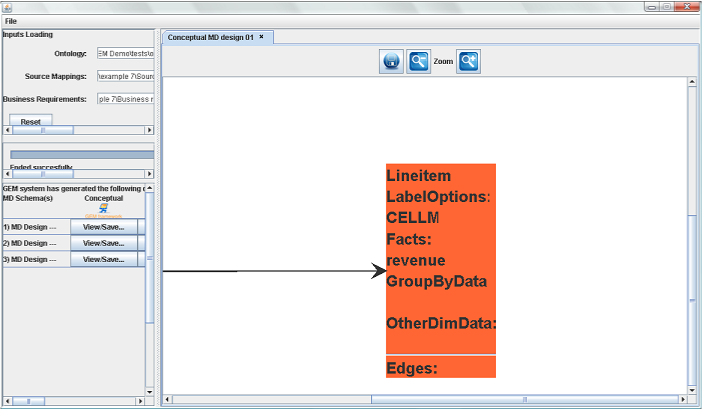
Conceptual MD design - fact
By zooming in we can see details of each concept.
In this case factual concept Lineitem with fact attribut revenue
GEM produces logical MD design represented in XML structure.
GEM produces physical MD design represented in SQL (PostgreSQL)
Conceptual ETL process design
Conceptual ETL process design - operations
By clicking the particular ETL operation,
we can see more details and involved concepts of that operation.
Logical ETL process design - XML
GEM produces logical ETL process design represented in XML structure.
Physical ETL process design - Kettle (PDI)
GEM produces physical ETL process design represented as transformation in Kettle (PDI) format.
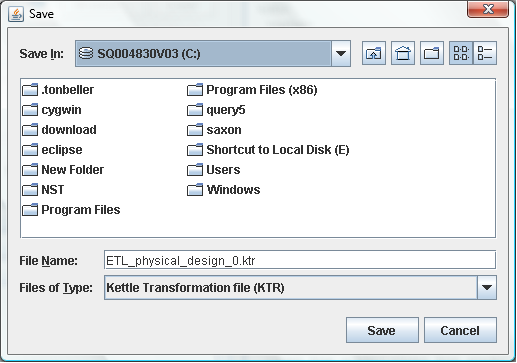
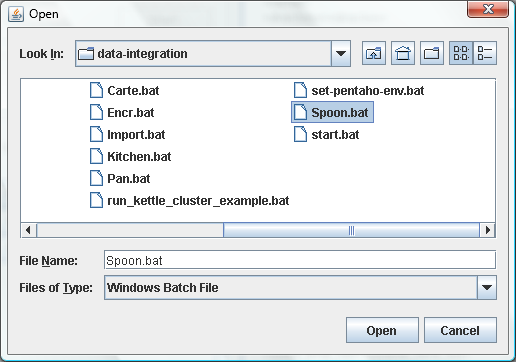
Design can be saved and opened inside the Pentaho Spoon tool, where it can be later modified and run.
Physical ETL design loaded in Pentaho Spoon tool






.png)
.png)
.png)
.png)
.png)
.png)
.png)
.png)
.png)
.png)